INTRODUCTION


COLONEL STEWART FRANCIS NEWCOMBE was already a legend in the deserts of Arabia before he was joined in Cairo during the early months of the First World War by a a remarkable team of Middle Eastern specialists. One member of this group was T.E. Lawrence who went on to achieve worldwide fame. Colonel Newcombe's story, like those of other unsung figures in the Anglo-Arabian narrative, has been eclipsed by the legend of ´Lawrence of Arabia´, and has languished in the dusty recesses of regimental records, government files or in the elliptical words of Lawrence’s book Seven Pillars of Wisdom. However, S.F. Newcombe´s untold story is there to be told. BEYOND ARABIA is a story of extraordinary exploits and courage, coupled with Newcombe's own legendary and inexhaustible supply of energy and of remarkable adventures under the very noses of the Ottoman authorities – full of danger, intrigue and perhaps more surprisingly, of romance during Newcombe's captivity in Turkey. In the years between the two world wars, Palestine became Newcombe’s main preoccupation, especially after his retirement from military service, and he spent many years in helping to achieve a just solution in relation to the promises that were made to the Arabs during the war in return for their active participation in support of the Allied cause. For this untiring effort he will be best remembered. This is his story.
Showing posts with label Gaza. Show all posts

Thursday, May 16, 2024

THE LONG ROAD TO COLLECTIVE DISPOSSESSION – PART TWO

Throughout the 1930’s a small but resolute group of British activists campaigned and lobbied on behalf of the rights of the Palestinians and passionately but unsuccessfully fought against an unrelenting process that ultimately led to the eviction, forced dispossession, and exile of 750,000 Palestinians during the Nakba of 1948 – the Catastrophe - a consequence of the deceitfully worded Balfour Declaration of 1917, the “most discreditable document to which a British Government has set its hand within memory” (Jeffries).

This determined but fragmented group of activists gathered mostly in London, and with limited resources but with extensive personal knowledge they attempted to push back against a robust and well-organised Zionist narrative. Their strong views and opinions were acquired from first-hand experience and long association with the land of Palestine and its people. Wherever they could, they added their voices, their arguments, their testimonies, and their recommendations to what remains an endless cycle of Palestinian victimisation and resistance – a desperate situation that resonates more powerfully today than at any other time in Palestinian history since the Nakba.

British activism in support of Palestine did not start in the 1930’s – it will be seen that Stewart Newcombe’s involvement began much earlier - but it came to a head in 1939 with the publication of the Peel Commission in 1937 and the 1939 White Paper, an inquiry and a policy paper that were set against the backdrop of the Great Arab Revolt in Mandatory Palestine, a popular uprising that was then in its third year. This article explores just a few of the key British personalities that were there at the birth of the pro-Palestinian movement.

This is their one-hundred-year-old story.

A TIME OF RECKONING - Post war years

In 1921, Colonel Stewart Newcombe was tasked with delineating the northern borders of Palestine, Lebanon and a small but significant corner of Syria with his French counterpart, Lieutenant Colonel Maurice Paulet, on behalf of the British Mandate of Palestine and Iraq and the French Mandate of Lebanon and Syria.

The physical process of surveying the proposed border had followed nearly two years of protracted negotiations between Whitehall and the Quai d'Orsay, with considerable influence injected into the British argument from the Zionist Organisation, aided by Colonel Richard Meinertzhagen, a Zionist sympathiser who had recently been appointed Chief Political Officer for Palestine at the urging of Chaim Weizmann, leader of the newly founded World Zionist Organisation. With the French growing increasingly suspicious of the British using Zionist claims as a pretext to penetrate further into the Middle East, Prime Minister Lloyd George needed all of his wily negotiating skills to overcome the basic problem that the British Government, under pressure from the Zionist Organisation, had been independently advised by Jewish experts who had already carried out their own boundary surveys to revise the borders as set out in the Sykes-Picot Agreement of 1916. Their aim was to take advantage of several water sources in the north and the east of the proposed mandate in order to electrify the future Jewish homeland.
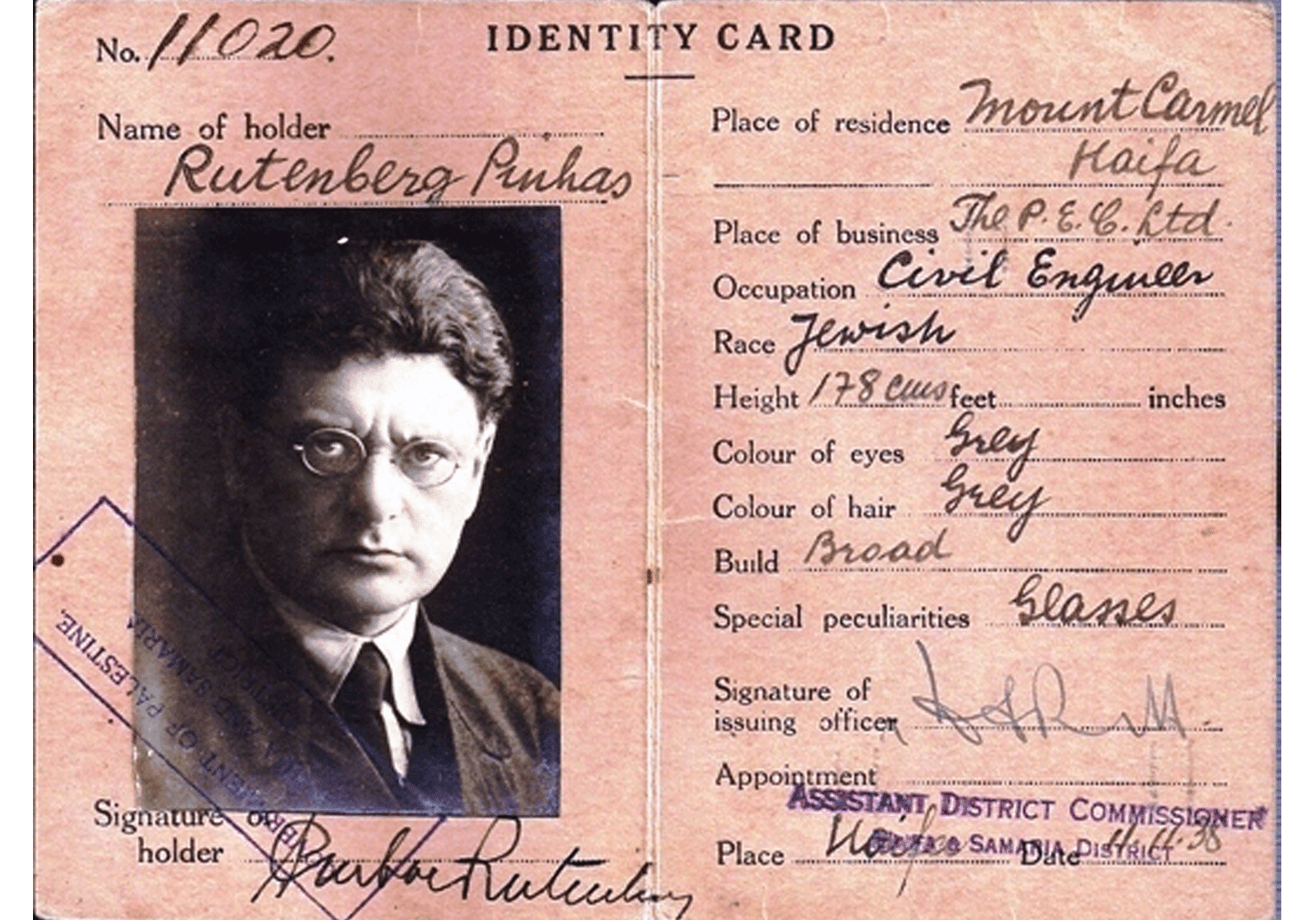
 
Pinhas Rutenberg

The previous year, renowned Jewish engineer Pinhas Rutenberg had arrived in a country impoverished by the Ottoman war machine and neglected by decades of misrule with a grand scheme to electrify and transform the country. For his plan to be successful, Rutenberg needed water, and so he turned his attention to the marshland of the upper Huleh Basin, a finger of land in the far north-east of the country extending beyond the proposed boundary of the mandate for Palestine. His scheme was so far removed from the ‘spiritual’ dimensions of the “promised land” that the issue of water now became central to the protracted negotiations. Newcombe’s explorations had identified the Huleh as land traditionally administered by Syrian sheikhs and their communities. From a military point of view, the wetlands of the Huleh would be difficult terrain to defend. Newcombe proposed including the region within the French sphere of influence as a fair compromise if concessions to control the railways connecting Deraa, Hejaz and the future Baghdad routes were ceded by France to Britain in exchange for the water. His recommendations were accepted by leading military advisors in Egypt and at the War Office in London on strategic grounds but would prove to be a point of contention that threatened wider discussions at government levels.

Soon, everyone was weighing in on the border question. Zionists in the US were especially vocal on the subject and were able to persuade President Woodrow Wilson to lobby the British government to include the Litani River and tributaries from the Jordan to be included in Palestine. Rutenberg wielded considerable influence and had powerful friends and later claimed that he was able to convince the French to modify the northern boundary to “conform with the economic and topographic requirements of Palestine.”

Newcombe fought back on his own terms. During his survey, the absence of negotiations with representatives from the Palestinian Arabs was a glaring omission not lost on Newcombe, despite several group petitions from tribal leaders asking for their needs to be considered. His experience on the ground and in heated discussions with his own government over Zionist demands, and pressure from Rutenberg and Weizmann in particular, would ultimately bring matters to a head. Newcombe informed the Colonial Office that he would refuse to sign any agreement “unless British interests are fully protected”. They promptly responded by dispatching an old colleague, Major Hubert Young, to inform Newcombe that in fact all the details had already decided behind the scenes and that he was duty-bound to accept the boundary as proposed by Rutenberg and the Zionists.

Much to Newcombe’s chagrin, his own carefully considered recommendations based on personal observations were set aside in favour of water for Palestine at any cost, irrespective of British or Arab interests. It was a matter of such deep concern to Newcombe that he took the highly unusual step of resigning from his post. As he claimed, “I had been brought up in the Sudan to consider natives’ interests and that the methods being employed were entirely against my principles”.

Young was quick to point out that the decision had come from the Cabinet and not the Colonial Office, and so after consultation with General Congreve, his GOC in Cairo, Newcombe had no option but to withdraw his resignation. He did so “with deep regret”, for as a serving officer he could not go against the Cabinet’s decision.

But if Rutenberg’s proposal for electrifying Palestine alleviated the problem of the country’s overdue development, it further reinforced Palestinian concerns, seeing the proposal as “not just a power system but also the base plate of a future Jewish state.” The seeds of discontent had been sown; this was electricity as power politics and the Palestinians were not fooled, condemning the network of high-tension cables and hydropower stations that delineated new borders and chanting in protest: “Rutenberg’s lampposts are the gallows of our nation!”

If Newcombe suspected that the electrification of Palestine by the Zionist movement was one of the chief vehicles of Jewish state building, then his role as a British officer meant that he had to hold his personal views in check, at least for now. However, at this defining moment in his career, where he had clearly wrestled with his conscience in the face of unrelenting Zionist pressure, he chose to pledge his unwavering support to the Palestinians and their goal of achieving self-determination and statehood. Thereafter, his stance as a British Arabist would mark him out as a troublemaker within Zionist circles.

The Paulet-Newcombe Boundary Line was eventually ratified in March 1923 and included the Rutenberg extension into the Huleh Valley as physical evidence of the depths of Zionist influence to achieve their own political aims over local interests and British military considerations. The electrification of Palestine by the Zionists had become crucial to its conquest and the future dispossession of the Palestinians. Arab leaders clearly understood the significance of what they saw as  the encroachment of Jewish nationalism upon their own aspirations. In a letter sent to the British government in 1922, they protested that "the Zionists, through Mr. Rutenberg, are aiming at getting a stranglehold on the economics of Palestine, and once that is in their hands they will become virtual masters of the country."

In 1917, with the backing of Christian governments employing the Bible as supporting evidence, the Zionists had wasted no time in utilising religious, spiritual and cultural themes for its own end. But by the mid-1930’s, even David Ben-Gurion, then Chairman of the Executive of the Jewish Agency and later first Prime Minister of Israel, disabused anyone who claimed there was any connections between political Zionism and those who saw Palestine as a spiritual centre for world Jewry: "I never believed and do not believe now in a spiritual centre and if I thought that that was all it was possible to achieve in Palestine, I would not advise even one Jew to come here." Having exploited the support of Christian Zionists, the scene was set for the forced dispossession of the Palestinians from their own land.

In the years before his retirement, Newcombe began to develop his own ideas on Jewish immigration with numbers to be limited by the economic absorptive capacity of the land. He favoured Jewish immigration that was supported by a cultural and spiritual connection to the land; political Zionism was anathema to his principles, suggesting that the role of the Zionist Commission should be limited to a philanthropic immigration agency. He fought tirelessly for a just solution to the establishment of a viable sovereign state for the Palestinian people in the face of significant Zionist advances into the country and remained a steadfast advocate on behalf of the Palestinians for the rest of his life. He became most politically active during the years prior to the Second World War.

After 34 years of military service, Newcombe's retirement in 1932 came in like a storm, with plans and schemes in hand that indicated that this next stage of his life was going to be far from the quiet retreat he deserved after years of strenuous physical exertion. Empires were shifting and the whole world was in a state of flux; Germany's war machine was on the move once again, and the Middle East was set to erupt in violent protest over an uncertain future.

BRITISH ACTIVISM IN SUPPORT OF THE PALESTINIANS IN THE 1930’S

“I was one of the instruments through whom promises were made to the Arabs. We have broken faith with them. I feel very deeply in this matter and ashamed to have taken so little part in rectifying matters.”

S.F. NEWCOMBE

THE PALESTINE INFORMATION CENTRE – 1937 

The committee list
The timing of Newcombe’s retirement coincided with a critical stage in Palestinian history, when the outcome of vigorous negotiations and lobbying on both sides would determine its future. Among the many clubs and societies that he was involved with - The Royal Central Asian Society, The Royal Geographical Society, the Palestine Exploration Fund, and others - Newcombe unhesitatingly became an enthusiastic member of a coalition of Muslim and non-Muslim campaigners advocating for Palestinian self-determination through an organisation he helped form called the Palestine Information Centre (the PIC), whose stated object was "To uphold the rights of the Arab population".

With no fewer than seven groups active in London countering the Zionist project on behalf of the Palestinians, the PIC attracted a group of men and women who kept the Arab cause alive despite firm opposition from persistent and persuasive lobbying that had grown in strength since the formation of the English Zionist Federation in 1899 and the emergence of political Zionism, reinvigorated by the Balfour Declaration in 1917 and the break-up of the Ottoman Empire at the end of the war.

The depth of experience and dedication to the cause is evident in the list of committee members of the Palestine Information Centre, which can be seen on a letterhead dated 8 May 1937. Among the names that stand out alongside Newcombe are Mrs Steuart Erskine (Beatrice Caroline Strong) and Francis Emily Newton, both long-standing committed activists, and Joseph Jefferies, a respected world-affairs journalist.

“I think it is right that the public should know the names of some of those who have kept the cause of the Arabs alive in Great Britain in the teeth of overwhelming opposition. Two motives have maintained their courage, when hope seemed farthest away. One was that a small country should never be downtrodden if they could help it. The other was that their own country should be true to her vows and to herself.”

J.M.N. JEFFRIES

Mrs STEUART ERSKINE (1860-1948) – Assistant Secretary. Beatrice Erskine was an accomplished travel writer and biographer who among her many works had written Trans-Jordan (1924), The Vanished Cities of Arabia (1925), and the authorised biography King Faisal of Iraq (1934), the latter producing an appreciation by Field-Marshal Viscount Allenby, and a foreword by his excellency Ja'far Pasha al Askari. With the publication of her book Palestine of the Arabs in 1935, she was one of the first members of the PIC to support the cause. The title itself was a lesson towards understanding the problem. As Secretary of the Centre, she worked tirelessly and brought a depth of knowledge and understanding to her role, as well as an impressive and influential list of contacts.

Published in 1948
FRANCIS EMILY NEWTON (4 November 1871 – 11 June 1955) – Honorary Secretary.
Francis Newton’s first experience of Palestine was as a volunteer for the Church Missionary Society, soon becoming a fierce supporter of women and children's rights in the country, being a leading member of the Palestine Women's Council. She lived and worked in Palestine from 1889 to 1938 and during that time she became Dame of Justice of the Venerable Order of St. John in Jerusalem in 1930. Among her written works is Fifty Years in Palestine (1948) containing commentaries on her personal experiences: life in Galilee, the surrender of Jerusalem, the welfare of women, the mandate for Palestine, Dead Sea oilfields, the London Conference, and more. She was once described as "tall and masterful and with the hell of a temper". Her home on Mount Carmel in Haifa was known by the Arabs to represent the best of British tradition and hospitality. When she died in 1955, such was her close association with her cause she was described as having "the exterior of an English woman and the mind of a Palestinian." She bequeathed a considerable sum of money, equivalent today of nearly 1.5 million Pounds Sterling, to displaced Palestinian Nakba refugees in Jordan.

Both Erskine and Newton were fervent anti-Zionists.

COLONEL STEWART FRANCIS NEWCOMBE (1878 -1956) - Honorary Treasurer

"Above all there is Lawrence's old companion, Colonel S.F. Newcombe, whose courteous and conciliatory manner, expressed in plans of his own for a settlement, has never hidden his firm espousal of justice for the Arabs."

J.M.N. JEFFRIES

Newcombe’s expressions of support for the Arabs and his proposals for a lasting settlement of what was then known as the "Palestine Question" will be discussed in my next post. In 1941, he helped establish the first permanent mosque in London, the East London Mosque and Islamic Cultural Centre, becoming its first non-Muslim Honorary Secretary.

J.M.N. JEFFRIES (1880-1960) was a highly respected journalist from the Daily Mail who was best known as a war correspondent who had set a record during the four years of the war by sending dispatches from 17 different countries. The contribution of Joseph Mary Nagle Jeffries to Palestinian politics and history is so significant that it warrants deeper examination.
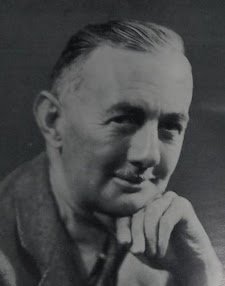
J.M.N. Jeffries
Few people will be familiar with his name, even those with a knowledge and interest in Palestinian affairs, but his contribution cannot be overlooked. His 750-page magnus opus, Palestine: The Reality, is largely unknown due to the bombing of a publishing house in London during the German blitz of 1940. Only 20 copies were known to be in circulation until a recent reprint in 2017 by Skyscraper Publications brought Jeffries' work back into wider public accessibility and with it his 12 years of meticulous research into the primary source material, historical documents, debates, and dispatches from Palestine. The result produced a critical assessment of the Balfour Declaration and its legacy and is an invaluable resource providing a persuasive argument for historians studying the Palestine question in the years 1917 to 1938.


“Palestine: The Reality is the most important study of Palestine yet published. As such it deserves to be in the hands of every man who cares for justice and peace”.

SIR ARNOLD WILSON, 1939

Jeffries recognised that for the Zionist project to succeed, the Palestinian people, their national identity, culture, and history would need to be concealed, dehumanised, or reduced to a condition that could easily be swept aside, or as he put it “vanish like the mist before the sun of Zion”. To this end, Zionists sought to establish a framework that Palestine was "a land without a people, for a people without a land", a slogan that Zionists like Israel Zangwill had adopted from early Christian restorationists. It was picked up and paraphrased by Chaim Weizmann, later president of the World Zionist Congress and the first president of the State of Israel, who said at a meeting in Paris in April 1914: "In its initial stage Zionism was conceived by its pioneers as a movement wholly depending on mechanical factors: there is a country which happens to be called Palestine, a country without a people, and, on the other hand, there exists the Jewish people, and it has no country. What else is necessary, then, than to fit the gem into the ring, to unite this people with this country?"

Theodor Herzl, the father of Zionism, thought that if Palestine could be positioned as an “outpost to civilization as opposed to barbarism,” it might be a more desirable destination for colonisation than Argentina, one of the many options then under discussion. These arguments were clearly designed to negate the validity of Palestinian Arab nationalism. In Ben-Gurion's view, there was no apparent contradiction between upholding the rights of a re-emerging nation in its ancient homeland and rejecting the legitimacy of the political demands of a people whose national instincts had been roused by contact and encouragement from Western governments and by the clash with Zionism itself.

Weizmann’s shuttle diplomacy to promote a Zionist wish list prior to the publication of the Declaration in 1917 betrays the fact that the authors were not British officials at all, but an influential group of some 20 Zionist leaders on both sides of the Atlantic tasked with composing a formula that would give them an unarguable right to the country and that it was Britain’s obligation to assist them in the endeavour. To provide this assistance it was necessary for the British Mandate to use coercion and brute force against an unwilling indigenous population in achieving these goals.

When Britain discarded the rights of the Arabs of Palestine in their quest to achieve self-determination and self-governance, and substituted it with the “rights” of a foreign community, they did so in the full knowledge of the facts. This was no honest mistake. To achieve Zionist goals, the Palestinians had to be erased. After killing 13,000 Palestinians during the Nakba of 1948, destroying 531 towns and villages and with 85% of the population banished and displaced, Ben Gurion endorsed this triumphant moment for the Zionist movement with the words: “We must do everything to ensure that they never do return!”

It was against this ill-conceived and deceitful perspective that Jeffries began to compile the source material, much of it previously unpublished, that forms the bulk of the case against the Balfour Declaration in his book, Palestine: The Reality. Throughout the 750-pages of his monumental work, Jeffries is clear, insistent, and outspoken in who is primarily responsible for the circumstances imposed upon Palestine. With each page being a damning criticism of the Declaration, Jefferies sums up his argument this way:

“More than anything else, we in Britain must keep clear in our minds today that we are the accused.”

Over eighty years have passed since Jeffries wrote these words in 1939, yet how many more countries share the responsibility for the current assault upon Palestine, “this small and wronged country”?

Today, this one-hundred-year-old story of the Palestinian struggle has found a new voice, originating from the ruins of Gaza, chanted on the streets of our capital cities, and echoed by young people in universities around the world. Above all, it is a story of resilience, perseverance, and resistance. The Palestinians have a single word for these traits, it is “sumud,” and the olive tree, ubiquitous throughout the land, is the symbol of sumud, reflecting the Palestinian sense of being rooted in their homeland.


CASUALTY UPDATE
As of 17/05/2024, the Gazan health ministry confirms that over 35,272 Gazans have been killed by the Israeli Defense Force. Of those, 24,686 are people whose identities that have been fully verified. There are 79,205 wounded. Two thirds of all casualties are women and children.

The Health Ministry says that there are more than 10,000 people that have been killed but it does not have their full names, official ID numbers or other information it needs to be certain of their identities.

Moreover, an estimated further 10,000 people remain missing, most likely buried under the rubble across Gaza.


Friday, January 12, 2024

Dr. Sterly's - A story of Gazan healthcare

"The best place in the whole of this country"

In preparation for their secret survey of the region of southern Palestine known as the Wilderness of Zin on behalf of the Palestine Exploration Fund (PEF), two archaeologists, Leonard Woolley and T.E. Lawrence, reached Jaffa on 5 January 1914 and travelled down the coast to the old town of Gaza which sat on its round hill two miles inland above the maritime quarter. Here they were surprised to discover that the PEF had failed to provide equipment, stores or money for their expedition. They immediately set about purchasing on credit what could be bought in the town with the assistance of Rev. Dr. Robert B. Sterling, of the Church Missionary Society.

Dr. Sterling, who had built what was possibly the first fully functioning hospital in the Holy Land, situated then as now in the south-west corner of the town, was a prominent and important personage in the region, accompanying his treatment of the sick with a liberal dose of Scottish evangelism. Theodore Dowling, a traveller to the town in 1912 describes his arrival to meet the doctor: "On reaching Jaffa I secured a fresh carriage on April 12, for Gaza, reaching that city in nine and a half hours, an unusually quick journey. During my visit of ten days there I was the guest of the Rev. Dr. and Mrs. Sterling, in the Church Missionary Society's compound. Nothing could have exceeded their kind hospitality, and I am greatly indebted to them for valuable local information." 

Dr. Sterling was also an excellent guide to the region and often accompanied visitors on trips to sites of historical interest throughout the town that was once celebrated as one of the five royal cities of the Philistines. The port area was of particular importance. "In company with Dr. Sterling I visited this spot, enveloped in sand, on April 18, where we found broken pieces of marble, ornamented glazed pottery, and ancient glass scattered in every direction... Augustus gave this port to Herod the Great, who rebuilt it, and changed its name into that of Agrippeion, after his friend Marcus Agrippa." 

The same traveller describes the continuing saga of the town which has stood at the crossroads of history for centuries: "Gaza was taken by Alexander the Great after a siege of two months. When he subdued it, he ordered all the men to be slaughtered without quarter, and carried away all the women and children into bondage... Gaza must have been at this time a city of great strength, for Alexander's Greek engineers acknowledged their inability to invent engines of sufficient power to batter its massive walls. Alexander himself was severely wounded in the shoulder during a sortie of this garrison."

A formally recognised health service in Gaza did not start until 1882, the first Church Missionary Society work of its kind in Palestine. Starting as a simple dispensary, funds were raised for establishing a permanent medical mission which soon became a favourite stopover of General Gordon (of Khartoum) who spent many weeks there in 1883 on his way up to Jerusalem to 'discover' his own preferred site for the garden tomb of Jesus. An interesting relic was the iron bedstead on which Gordon slept and was preserved in his name to show visitors.

All this time the medical work was confined to the treatment of out-patients, but in March 1891 a hospital adapted from a native house was opened. Dr. Sterling arrived in 1893 and expanded the services offered by the hospital to include in-patient care. It's reputation grew and in 1906 the Muslim community presented Dr. Sterling with £100 which they had collected in token of their gratitude for his work among them. The hospital and out-patient hall were now much too small to match its growing reputation and on 1 April 1908 the Bishop of Jerusalem dedicated a new hospital containing forty-six beds followed by the opening of a spacious out-patient block on 22 February 1911.

Patients were drawn from across the community, Muslims, Orthodox Syrians and Jews. They would sit side by side in the out-patient hall waiting patiently to be seen by the doctor, an accomplished Arabic scholar. During 1912 it is recorded that there were 29,581 out-patients, 701 in-patients, 452 visits in town, and 411 major operations. Fees from the in-patients and out-patients during 1912 amounted to just over £326 which went to assist in the upkeep of the hospital.

On the eve of the First World War, Woolley and Lawrence had completed their clandestine mission to provide an archaeological cover to Newcombe's military exploration of the Aqaba hinterland but were delayed in their return to England. Newcombe, however, eager to get his maps back to the Geographical Department of the War Office, arrived back in London earlier and presented their account of the archaeological survey of Zin to the 49th Annual General Meeting of the Palestine Exploration Fund held on Tuesday, 16 June 1914.

In concluding his talk, Newcombe praised the indomitable Dr. Sterling whose Church Mission Society Hospital was, he considered, "the best place in the whole of this country," and that full value was obtained for every contribution to the Hospital. He described Sterling’s reputation among the Arabs and the townspeople of Gaza as remarkable and "one to make anyone feel proud of his nationality." Sterling’s work among the Palestinians of Gaza had become legendary and his name was synonymous with the hospital he had helped create, so much so that it was known locally as the English Hospital or even Dr. Sterly’s, an Arabic corruption of his name. 

Dr. Sterling spent 20 years in Palestine before his death in 1917. Today, his legacy has been renamed the Al Ahli Arab Hospital and is run by Anglican management, the only Christian hospital in the Gaza Strip and the only centre for cancer treatment. At 6:59 pm on 17 October 2023, a rocket explosion killed and wounded an unknown number of Palestinians who were seeking refuge from Israeli airstrikes in the courtyard in front of the hospital entrance. Palestinian officials blame an Israeli airstrike for the explosion and Israel says the blast was caused by a failed rocket launch by the Palestinian Islamic Jihad militant group, which denies blame. Yet despite these extraordinary setbacks and under extreme circumstances, the hospital and its resilient, heroic staff remain a beacon of hope in today's war-torn Gaza.

Its website states that despite "constant turmoil, Al Ahli has been the sole fully-functional hospital in all of northern Gaza for over six weeks, serving many more patients than the staff is equipped to accommodate. In defiance of extraordinary, temporary setbacks, intermittent military occupation, and terrifying, life-threatening circumstances, the inspirational medical team and staff at Ahli Arab Hospital continue to persevere and work tirelessly for the sick, injured, and others in need. The stress on these brave individuals and the hospital facility is incomprehensible, and their resilience in fulfilling their mission of healing is exemplary." It seems the spirit of the Rev. Dr. Robert Sterling lives on.


"Whoever stays until the end will tell the story. We did what we could. Remember us"
⁠
These words were written on 20 October 2023 by Dr. Mahmoud Abu Nujaila, on a whiteboard normally used for planning surgeries at the Al Awda Hospital situated just a few kilometers north of Al Ahli Hospital.

One month later Dr. Abu Nujaila was killed by an Israeli strike on 21 November. The same strike killed another Médecins Sans Frontières (MSF) doctor, Dr. Ahmad Al Sahar, as well as a third doctor, Dr. Ziad Al-Tatari. 

In a text message sent one week before his death, Dr Abu Nujaila described his heartbreak at caring for three patients, children aged eight, seven and four. The only survivors from three different families, the children were brought to the hospital suffering from fractures, burns and deep wounds. Dr Abu Nujaila said in his message: “I take care of them daily. They have become my own children.

“We await at any time the order from the Israeli army to forcefully evacuate to the southern region of Gaza and to leave these children. Tell me, for God’s sake, 'how can I leave them?' I don’t dare even think about it.”

Dr Abu Nujaila and Dr Al Sahar were treating patients on the third and fourth floors when the hospital was targeted. Other medical staff, including MSF staff, were also severely injured. Along with the Al Ahli, the Al Awda hospital was one of the last remaining partly functional hospitals in northern Gaza.

As of December, MSF staff reported that the Israeli Defense Force had surround and seized the hospital and had stripped, bound, and interrogated all men and boys over the age of sixteen. For more than 20 days, no one was able to enter or leave the hospital after it was surrounded by snipers. Medical provision was halted as 170 people trapped inside – staff, patients, and their relatives – fought to survive on increasingly dwindling food and water supplies.

Action Aid, a partner of the hospital, reported that Dr Adnan Radi, head of the Department of Obstetrics and Gynaecology at Al-Awda Hospital, had informed them that six healthcare workers died in the final days of the siege, while pregnant women were killed while attempting to access the hospital. The manager of the hospital, Dr Ahmed Muhanna, who was arrested and taken away, is still being held, his whereabouts unknown. 

Following the end of the siege, doctors at Al-Awda have once again resumed treating patients despite experiencing a severe shortage of medical supplies, fuel, food and water. With no electricity, surgery is carried out under headlights.

"I want to become a doctor, like those who treat us, so that I can treat other children"

This is the story of 12-year-old Dunia Abu Mohsen who was recovering from losing her leg in an Israeli air strike on 27 October that struck her home in Al-Amal neighbourhood of Khan Yunis. Six of her family members were killed in the air strike, including her parents and two of her siblings. During the seven-day truce, Dunia was interviewed in hospital by the Defense for Children International Palestine (DCIP) and said: “When they shelled us with the second missile, I woke up and was surrounded by rubble,” she calmly tells her interviewer. “I realized that my leg had been cut off because there was blood and I had no leg. My father and mother were martyred, my brother Mohammed and my sister Dahlia, too,” she said calmly. “I want someone to take me abroad, to any country, to install a prosthetic leg, to be able to walk like other people.”

Her dream? “I want to become a doctor, like those who treat us, so that I can treat other children. ” But then she added: “I only want one thing: For the war to end.”

For Dunia, the war ended on 17 December 2023 when an Israeli tank shell burst through the children's ward of the Nasser Hospital in Khan Yunis in southern Gaza, a so-called safe zone where Israel had told people to evacuate to. Miranda Cleland from the DCIP called Dunia's story the distillation of the Palestinian child's experience in Gaza: "Displaced, bombed, orphaned, maimed, and finally killed by the Israeli military."
WCNSF
Wounded Child, No Surviving Family

UNICEF, the UN’s children’s fund, estimates that minors account for at least 40% of the estimated 24,000 people killed so far, with many more suffering life changing injuries. For this reason, many of the patients filling the hospitals have been assigned a new chilling acronym: “WCNSF” – “wounded child, no surviving family”.

“When we speak of a war on children, it’s not to try to be dramatic. It’s rooted in the data,” said James Elder, UNICEF's chief spokesperson, who spent weeks in Gaza under bombardment. “In ‘normal’ past conflicts, the rate was about 20%, so you’re looking at twice the number of children who have been killed and injured compared with previous conflicts.

“That speaks obviously to the severity and the intensity of the bombardment. We believe it also speaks to the indiscriminate nature of the bombardment, and it speaks to a disregard for civilians, particularly children.”

"Gaza has become a place of death and despair" 

Martin Griffiths, UN Under Secretary General for Humanitarian Affairs and Emergency Relief Coordinator stated last Friday, 5 January: "Gaza has become a place of death and despair. Tens of thousands of people, mostly women and children, have been killed or injured. Families are sleeping in the open as temperatures plummet. Areas where civilians were told to relocate for their safety have come under bombardment. Medical facilities are under relentless attack. The few hospitals that are partially functional are overwhelmed with trauma cases, critically short of all supplies and inundated by desperate people seeking safety. 

A public health disaster is unfolding. Infectious diseases are spreading in overcrowded shelters as sewers spill over. Some 180 women are giving birth daily amidst this chaos. People are facing the highest levels of food insecurity ever recorded. Famine is around the corner. 

For children in particular, the last 12 weeks have been traumatic: no food, no water, no school, nothing but the terrifying sounds of war, day in and day out. Gaza has simply become uninhabitable. Its people are witnessing daily threats to their very existence, - while the world watches on."

The above was quoted on 11 January 2023, by Blinne Ni Ghralaigh K.C, an Irish lawyer speaking for South Africa at the International Court of Justice (ICJ) in the genocide case against Israel. She closed by calling this:  "the first genocide in history where its victims are broadcasting their own destruction in real time in the desperate so far vain hope that the world might do something."

Healthcare in Gaza, 2024

International medical aid groups including the World Health Organization (WHO) and Doctors Without Borders said last week that the Gaza health system is “completely collapsing" with many operations carried out without anesthesia. With only four hospitals partially functioning in northern Gaza, they remain a lifeline for thousands of desperate people seeking medical aid and shelter. On Sunday, 7 January 2024, the WHO said it had called off a planned mission to bring medical supplies to Al-Awda and other hospitals in the north for the fourth time after failing to receive safety guarantees. It has now been almost two weeks since the agency was last able to reach northern Gaza. 

I may occasionally diverge from my normal narrative relating to Stewart Newcombe's life and his active involvement in the region, but if I know anything about the man it is that he would want his voice heard at this critical point in the history of Palestine and its people. In 1914, Newcombe announced that Britain should be proud of the achievements of Dr. Sterly's Gaza Hospital; in 2024, we should all be horrified that healthcare in Gaza has become yet one more battleground where more than 300 healthcare workers have been killed during 100 days of Israel's assault on Gaza. 

At the ICJ on 12 January, during their response to South Africa's case of genocide against Israel, a lawyer representing Israel claimed under oath that hospitals "have not been bombed, rather the IDF sent soldiers to search and dismantle military infrastructure, reducing the damage and destruction." The Indonesian Hospital, Al Shifa Hospital, The International Eye Care Centre, the Turkish-Palestinian Friendship Hospital, The Al Quds Hospital, could all tell a different tale with many more coming under repeated Israeli strikes. Some may never reopen so severe is the damage. The forced closure of many medical facilities stems not just from damage by attacks but from the absence of electricity, fuel and supplies. Ambulances and staff have also been repeatedly targeted. In a rare admission, Israel claimed responsibility for one such attack on an ambulance convey outside the Al Shifa Hospital where at least 15 people were killed and over 50 wounded. According to the Palestine Red Crescent Society all 15 were civilians. 

Asymmetrical warfare is messy and lines can be blurred, but there are clear rules of engagement. Article 3 (4) common to the Geneva Convention 1949 stipulates that all parties to an armed conflict must distinguish between persons engaging in hostilities and persons who are not, or no longer, taking part in them. The latter must be dealt with humanely and, in particular, they must not be maltreated, taken hostage or summarily sentenced or executed. The sick and wounded must be cared for. 

The resilience of the Gazan people is rooted in history and a deep connection to their land. As Gerald Butt says in his excellent biography of the town, Life at the Crossroads (Rimal Publications, 2009):

"For those familiar with the history of the region, the Israeli bombardment (2008) evoked echoes of previous ones - the two-month-long siege of Gaza and its ultimate destruction by Alexander the Great in 332 BCE to mention just one example". 

When Gaza finally succumbed to Alexander, its military commander, a stubborn man named Batis, refused to kneel before Alexander and acknowledge him as the new King of Asia nor submit to the rule of the Macedonians. It was a defiant act of resistance that so enraged Alexander that ropes were inserted through Batis' Achilles tendons and he was dragged behind a chariot around the perimeter of the town walls until he died.      

The Grand Mosque of Gaza, showing WW1 damage

Gaza may be in ruins once again, but as Gerald Butt says: "its people have inherited the stubbornness that has allowed the city and the territory to survive so long and under such overwhelming odds." It could be said that the cycle of death and destruction that the Gazans have endured since 1948 - 81% of Gazans are Nakba refugees or their descendants - have shaped their character in a way that has made them tougher and more determined than other Palestinians. They will need those characteristics more than ever in 2024.

Photograph: Library of Congress Prints and Photographs Division Washington, D.C. 20540 USA

NEXT POST: Part Two - The Long Road to Collective Dispossession

Tuesday, November 7, 2023

NEWCOMBE AND THE PALESTINIANS

‘I am angry with myself for not being able to do more’.

STEWART FRANCIS NEWCOMBE


‘Newcombe’s feeling of guilt persisted to the end of his life and kept him constantly active in furthering Arab political aims.’

ARNOLD LAWRENCE (T. E’s BROTHER) TO JEREMY WILSON, AUGUST 1971


On 7 October 2023, the Al-Qasam Brigade, the military wing of the Palestinian organisation Hamas, broke out of besieged Gaza and brutally massacred Israeli and foreign citizens and military personnel, an operation that left around 1200 dead, injuring many more, and taking approximately 230 hostages. The attack, named Operation Al-Aqsa Flood by Hamas, proved to be the bloodiest day in Israel’s history. In the aftermath of a huge intelligence, military and security failure, Israel's retaliation on the Hamas controlled Gaza Strip was immediate, devastating and driven by a desire for retribution.

Israel asserts its right to self-defence and history shows that it has never refrained from using disproportionate force in response to attacks coming from Gaza, or elsewhere. Backed by statements of support from the US, the UK and others, the Israeli Defense Force has since unleashed a firestorm on the Gazan civilian population from land, sea, and air. As a result of this ongoing action, accusations have been made that Israel has violated numerous articles of international law. Human rights organizations and governments from all over the world have called for an end to hostilities or, at the very least, a pause to allow in much needed aid and relief to people caught up in a humanitarian disaster. Israel counters this by saying a ceasefire will simply give Hamas time to regroup and rearm.

In all the years I have studied the situation in Israel and Palestine, I have never before seen this level of brutality, barbarity and destruction inflicted upon the Palestinian people in the Gaza Strip. This is unprecedented. With live streaming, it is possible to witness this in real time. According to different sources (as of 7 November 2023), in excess of 10,000 Palestinian men, women, and children, have so far died in four weeks of relentless bombing that has targeted residential properties, hospitals, ambulances, schools, UNWRA refugee centres, churches and mosques, bakeries, so-called safe routes to the south, as well as the only remaining exit out of the Strip at Rafa on the Egyptian border. Israel claims that Hamas bunkers and tunnels operate under these buildings and are therefore legitimate targets. In the coming days and weeks, thousands of bodies will be pulled from under the rubble of Gaza City as well as the eight refugee camps that lie within its encircled boundary. With no humanitarian pause in sight, it appears Israel is determined to eradicate not only Hamas but also Gaza itself. Soon there will be nothing left for Gazans to return to. (NOTE: As of 26 January 2024, the number of dead has risen to over 30,000).

Israel has maintained control over Gaza's land, sea, and air since the brutal blockade of 2007, tightly regulating the supply of water, electricity, fuel, and other essential goods, and limiting or prohibiting the movement of people. Services such as desperately needed medical aid and internet connectivity have been weaponized and are arbitrarily withdrawn.

Gaza has a population of 2.2 million people crowded into what is in effect the world's largest concentration camp. With half of the population under the age of 18, more than 4000 children have been killed so far. Surely the terrible attack by Hamas cannot justify the murder of so many innocent children. Injuries from bomb blasts, full body burns, allegedly from phosphorous shells according to doctors on the ground, and the mental suffering from seeing loved ones torn to pieces are wounds that will never heal. While claiming to target Hamas fighters, entire families are being wiped out by indiscriminate bombing. Israel disputes any numbers coming from the Hamas controlled health authority and claims that many killed will be Hamas fighters. The number of dead women and children will tell another tale. 

Among the dead are at least 37 journalists, having been killed while displaying courage and tenacity in telling their story to the world. Despite the horrifying scenes of the Hamas terror attack on 7 October, known as Israel’s Black Saturday, many major cities in the world continue to witness incredible scenes of support for Palestine. Israel has lost the propaganda war. (NOTE: As of 26 January 2024, there are now over 83 Journalists killed according to the Committee to Protect Journalists, more than in WW2 which lasted four years, and in Vietnam which last two decades.)

Palestine's armed resistance against Israel's colonisation did not start on 7 October 2023; the long road to the collective dispossession of the indigenous people of Palestine began much earlier. This was alluded to by António Guterres, Secretary General of the UN, who told the security council: “It is important to also recognise the attacks by Hamas did not happen in a vacuum. The Palestinian people have been subjected to 56 years of suffocating occupation.” Guterres was of course referring to the aftermath of the Six-Day War of 1967 when Israel launched a pre-emptive strike on the opening day of the war designed to destroy the Egyptian Air force and its airfields following the mass mobilisation of an Arab military alliance that had aggressively surrounded Israel on at least two borders. In the ensuing six-day conflict, Israel won territorial gains from Egypt, Jordan and Syria which included the West Bank, East Jerusalem, the Golan Heights, the Sinai, and the Gaza Strip.

Israel immediately called for Guiterres' resignation and announced that it was withdrawing travel visas for UN officials, including the UN humanitarian coordinator, Martin Griffiths. As fury grows over its strikes on Gaza, it seems Israel is not afraid to lose friends and support in order to pursue its war aims. Meanwhile, the Israeli hostages remain in captivity and more than 1.6 million Palestinians have been displaced.

Respected Israeli and Jewish academics have described Israel as a colonial settler apartheid regime established in 1948 on the land of Palestine and at the expense and ethnic cleansing of the Palestinian people following their catastrophe (al-Nakba). For fifty-six years, Israel has held Gaza and the West Bank under strict military occupation, and in international law has a duty to protect all civilians under its control. Francesca Albanese, United Nations Special Rapporteur on the occupied Palestinian territories, pointed out that Israel "cannot claim the right to self defense against a threat that emanates from the territory it occupies... from a territory that is kept under belligerent occupation." It is like saying that an abuser has the right to defend himself because his victim struck him. Meanwhile, attacks from armed colonialist settlers and military raids in the West Bank, which is not under Hamas control, complete the stranglehold on Palestinian freedoms and render the possibility of a two state solution null and void.  

I cannot guess what the Arabist, Colonel Stewart Newcombe’s reaction would have been to these events, but I know he would not have stood idly by while innocent civilians on both sides were slaughtered in their thousands.  

But Guterres was reticent in his speech to the United Nations and could have gone back much further, beyond even the 1948 Nakba, when 750,000 Palestinians were forced from their homes at the birth of a nation whose very existence was predicated on the destruction of another. Today, images of long lines of Gazans fleeing for their lives, waving white flags of surrender out of fear of being targeted, are a stark reminder of a catastrophe that has lasted over 75 years. In the follow-up to this article, I will try to contextualize many of the major events that led to this dark place in the history of the region, paying special attention to Newcombe's involvement and his steadfast support for the Palestinian people who were once promised so much in what became known as the twice promised land.         

Thursday, April 7, 2011

Some reading suggestions

Books by or about T.E. Lawrence would fill a fair-sized library. Recently, in  connection with S.F. Newcombe's involvement in the region and its politics, I have been exploring the Israeli narrative of the years that followed the end of the British Mandate - what is in fact an Israeli re-assessment and re-evaluation of the evidence that has brought the region to its current situation. The following is a suggested selection of books on Lawrence and on the region, past and present:   

LAWRENCE OF ARABIA by Jeremy Wilson, 1989, William Heinemann Ltd, 0-434-87235-0

This is the authorised biography of T.E. Lawrence, running to more than 1150 pages (with notes) and essential reading for anyone interested in Lawrence, the Middle East and the history of the Arab Revolt during the First World War. Jeremy Wilson continues to publish Lawrence material through his Castle Hill Press in limited editions, typeset to fine-press standards and printed by high-quality printers.

HERO: THE LIFE AND LEGEND OF LAWRENCE OF ARABIA by Michael Korda, 2010, Harper Publications, 978-0-06-171261-6

In contrast, this is the latest biography of T.E. Lawrence published at the end of 2010. It is aimed at a general audience but is nonetheless the first major biography of Lawrence for some years. At least one book on or featuring Lawrence has been published every year since he died in 1935, along with a handful during his lifetime. Korda's biography relies on previous biographies when narrating Lawrence's life story but also brings in other aspects, such as his role as a writer and publisher as well as an assessment of his political ideas for creating a post WW1 Middle East.

LAWRENCE OF ARABIA'S SECRET AIR FORCE by James Hynes, 2010, Pen and Sword Aviation, 978-1-84884-266-3 

This book has been discussed in a previous posting (26 August 2010) and was also published in 2010, continuing the consistent publishing history of books on Lawrence.

LIFE AT THE CROSSROADS: A HISTORY OF GAZA by Gerald Butt, 2009, Rimal Publications, 978-9963-610-39-6  

A comprehensive yet concise chronicle of Gaza's history from ancient times to the end of the 2008-2009 Israeli war against the territory’s Hamas-led administration. Newcombe knew the town well from before WW1 and praised the Rev. Dr. Sterling of the Church Missionary Society for his  medical work in Gaza where the CMS opened the first hospital in the Holy Land in 1907, continuing today as the Al Ahli Arab (Anglican) Hospital. Newcombe's raid behind enemy lines contributed to unlocking the stalemate over the Turkish held Gaza-Beersheba line prior to the Third Battle of Gaza. 

PALESTINIAN WALKS: NOTES ON A VANISHING LANDSCAPE, by Raja Shehadeh, 2008, Profile Books, 978-1-86197-899-8

Palestinian Walks was the winner of the 2008 Orwell Prize and covers seven walks that the author, a Palestinian lawyer and writer living in Ramallah, regularly took over a 27 year period, chronicling the different stages of Palestinian history. It is a story that is infused with the author's pain and anger without the excesses of pure polemic. Jimmy Carter wrote: 'Palestinian Walks provides a rare historical insight into the tragic changes taking place in Palestine.' Stewart Newcombe also walked this way - before, during and after the First World War. His experiences took him on paths that were often contrary to the direction of his own government. I would recommend that you walk with Shahedeh and Newcombe to discover an endangered landscape. 

The same landscape, this time 'uncovered' by an Israeli, is portrayed in:

SACRED LANDSCAPE: THE BURIED HISTORY OF THE HOLY LAND SINCE 1948, by Meron Benvenisti, 2002, University of California Press, 978-0-520-23422-2

Benvenisti was deputy mayor of Jerusalem from 1971 to 1978 and as a young man accompanied his father, a distinguished geographer, throughout the Holy Land charting a Hebrew map that would rename Palestinian sites and villages (sites and names meticulously charted by Conder, Kitchener, Newcombe and the Palestine Exploration Fund) to correspond with Israel's ancestral homeland. In doing so, Benvenisti's quiet outrage, combined with meticulous scholarship, makes this a formidable critique of the Zionist myth.

"Landscape is the work of the mind," wrote Simon Schama. "It's scenery is built up as much from strata of memory as from layers of rock."

In Sacred Landscape, Benvenisti explains how an Arab landscape, physical and human, was transformed into an Israeli Jewish state.