INTRODUCTION


COLONEL STEWART FRANCIS NEWCOMBE was already a legend in the deserts of Arabia before he was joined in Cairo during the early months of the First World War by a a remarkable team of Middle Eastern specialists. One member of this group was T.E. Lawrence who went on to achieve worldwide fame. Colonel Newcombe's story, like those of other unsung figures in the Anglo-Arabian narrative, has been eclipsed by the legend of ´Lawrence of Arabia´, and has languished in the dusty recesses of regimental records, government files or in the elliptical words of Lawrence’s book Seven Pillars of Wisdom. However, S.F. Newcombe´s untold story is there to be told. BEYOND ARABIA is a story of extraordinary exploits and courage, coupled with Newcombe's own legendary and inexhaustible supply of energy and of remarkable adventures under the very noses of the Ottoman authorities – full of danger, intrigue and perhaps more surprisingly, of romance during Newcombe's captivity in Turkey. In the years between the two world wars, Palestine became Newcombe’s main preoccupation, especially after his retirement from military service, and he spent many years in helping to achieve a just solution in relation to the promises that were made to the Arabs during the war in return for their active participation in support of the Allied cause. For this untiring effort he will be best remembered. This is his story.
Showing posts with label Balfour Declaration. Show all posts

Thursday, May 16, 2024

THE LONG ROAD TO COLLECTIVE DISPOSSESSION – PART TWO

Throughout the 1930’s a small but resolute group of British activists campaigned and lobbied on behalf of the rights of the Palestinians and passionately but unsuccessfully fought against an unrelenting process that ultimately led to the eviction, forced dispossession, and exile of 750,000 Palestinians during the Nakba of 1948 – the Catastrophe - a consequence of the deceitfully worded Balfour Declaration of 1917, the “most discreditable document to which a British Government has set its hand within memory” (Jeffries).

This determined but fragmented group of activists gathered mostly in London, and with limited resources but with extensive personal knowledge they attempted to push back against a robust and well-organised Zionist narrative. Their strong views and opinions were acquired from first-hand experience and long association with the land of Palestine and its people. Wherever they could, they added their voices, their arguments, their testimonies, and their recommendations to what remains an endless cycle of Palestinian victimisation and resistance – a desperate situation that resonates more powerfully today than at any other time in Palestinian history since the Nakba.

British activism in support of Palestine did not start in the 1930’s – it will be seen that Stewart Newcombe’s involvement began much earlier - but it came to a head in 1939 with the publication of the Peel Commission in 1937 and the 1939 White Paper, an inquiry and a policy paper that were set against the backdrop of the Great Arab Revolt in Mandatory Palestine, a popular uprising that was then in its third year. This article explores just a few of the key British personalities that were there at the birth of the pro-Palestinian movement.

This is their one-hundred-year-old story.

A TIME OF RECKONING - Post war years

In 1921, Colonel Stewart Newcombe was tasked with delineating the northern borders of Palestine, Lebanon and a small but significant corner of Syria with his French counterpart, Lieutenant Colonel Maurice Paulet, on behalf of the British Mandate of Palestine and Iraq and the French Mandate of Lebanon and Syria.

The physical process of surveying the proposed border had followed nearly two years of protracted negotiations between Whitehall and the Quai d'Orsay, with considerable influence injected into the British argument from the Zionist Organisation, aided by Colonel Richard Meinertzhagen, a Zionist sympathiser who had recently been appointed Chief Political Officer for Palestine at the urging of Chaim Weizmann, leader of the newly founded World Zionist Organisation. With the French growing increasingly suspicious of the British using Zionist claims as a pretext to penetrate further into the Middle East, Prime Minister Lloyd George needed all of his wily negotiating skills to overcome the basic problem that the British Government, under pressure from the Zionist Organisation, had been independently advised by Jewish experts who had already carried out their own boundary surveys to revise the borders as set out in the Sykes-Picot Agreement of 1916. Their aim was to take advantage of several water sources in the north and the east of the proposed mandate in order to electrify the future Jewish homeland.
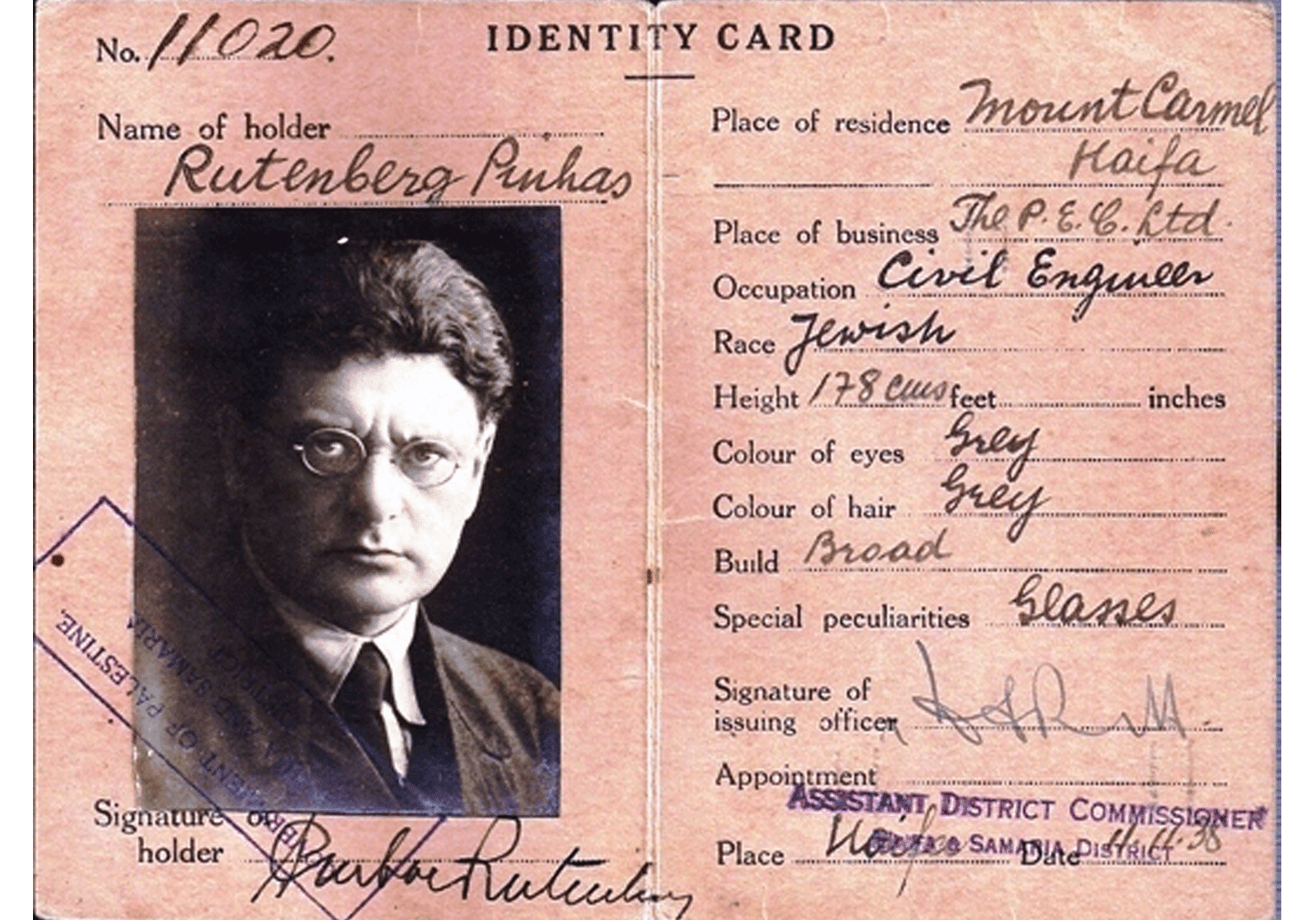
 
Pinhas Rutenberg

The previous year, renowned Jewish engineer Pinhas Rutenberg had arrived in a country impoverished by the Ottoman war machine and neglected by decades of misrule with a grand scheme to electrify and transform the country. For his plan to be successful, Rutenberg needed water, and so he turned his attention to the marshland of the upper Huleh Basin, a finger of land in the far north-east of the country extending beyond the proposed boundary of the mandate for Palestine. His scheme was so far removed from the ‘spiritual’ dimensions of the “promised land” that the issue of water now became central to the protracted negotiations. Newcombe’s explorations had identified the Huleh as land traditionally administered by Syrian sheikhs and their communities. From a military point of view, the wetlands of the Huleh would be difficult terrain to defend. Newcombe proposed including the region within the French sphere of influence as a fair compromise if concessions to control the railways connecting Deraa, Hejaz and the future Baghdad routes were ceded by France to Britain in exchange for the water. His recommendations were accepted by leading military advisors in Egypt and at the War Office in London on strategic grounds but would prove to be a point of contention that threatened wider discussions at government levels.

Soon, everyone was weighing in on the border question. Zionists in the US were especially vocal on the subject and were able to persuade President Woodrow Wilson to lobby the British government to include the Litani River and tributaries from the Jordan to be included in Palestine. Rutenberg wielded considerable influence and had powerful friends and later claimed that he was able to convince the French to modify the northern boundary to “conform with the economic and topographic requirements of Palestine.”

Newcombe fought back on his own terms. During his survey, the absence of negotiations with representatives from the Palestinian Arabs was a glaring omission not lost on Newcombe, despite several group petitions from tribal leaders asking for their needs to be considered. His experience on the ground and in heated discussions with his own government over Zionist demands, and pressure from Rutenberg and Weizmann in particular, would ultimately bring matters to a head. Newcombe informed the Colonial Office that he would refuse to sign any agreement “unless British interests are fully protected”. They promptly responded by dispatching an old colleague, Major Hubert Young, to inform Newcombe that in fact all the details had already decided behind the scenes and that he was duty-bound to accept the boundary as proposed by Rutenberg and the Zionists.

Much to Newcombe’s chagrin, his own carefully considered recommendations based on personal observations were set aside in favour of water for Palestine at any cost, irrespective of British or Arab interests. It was a matter of such deep concern to Newcombe that he took the highly unusual step of resigning from his post. As he claimed, “I had been brought up in the Sudan to consider natives’ interests and that the methods being employed were entirely against my principles”.

Young was quick to point out that the decision had come from the Cabinet and not the Colonial Office, and so after consultation with General Congreve, his GOC in Cairo, Newcombe had no option but to withdraw his resignation. He did so “with deep regret”, for as a serving officer he could not go against the Cabinet’s decision.

But if Rutenberg’s proposal for electrifying Palestine alleviated the problem of the country’s overdue development, it further reinforced Palestinian concerns, seeing the proposal as “not just a power system but also the base plate of a future Jewish state.” The seeds of discontent had been sown; this was electricity as power politics and the Palestinians were not fooled, condemning the network of high-tension cables and hydropower stations that delineated new borders and chanting in protest: “Rutenberg’s lampposts are the gallows of our nation!”

If Newcombe suspected that the electrification of Palestine by the Zionist movement was one of the chief vehicles of Jewish state building, then his role as a British officer meant that he had to hold his personal views in check, at least for now. However, at this defining moment in his career, where he had clearly wrestled with his conscience in the face of unrelenting Zionist pressure, he chose to pledge his unwavering support to the Palestinians and their goal of achieving self-determination and statehood. Thereafter, his stance as a British Arabist would mark him out as a troublemaker within Zionist circles.

The Paulet-Newcombe Boundary Line was eventually ratified in March 1923 and included the Rutenberg extension into the Huleh Valley as physical evidence of the depths of Zionist influence to achieve their own political aims over local interests and British military considerations. The electrification of Palestine by the Zionists had become crucial to its conquest and the future dispossession of the Palestinians. Arab leaders clearly understood the significance of what they saw as  the encroachment of Jewish nationalism upon their own aspirations. In a letter sent to the British government in 1922, they protested that "the Zionists, through Mr. Rutenberg, are aiming at getting a stranglehold on the economics of Palestine, and once that is in their hands they will become virtual masters of the country."

In 1917, with the backing of Christian governments employing the Bible as supporting evidence, the Zionists had wasted no time in utilising religious, spiritual and cultural themes for its own end. But by the mid-1930’s, even David Ben-Gurion, then Chairman of the Executive of the Jewish Agency and later first Prime Minister of Israel, disabused anyone who claimed there was any connections between political Zionism and those who saw Palestine as a spiritual centre for world Jewry: "I never believed and do not believe now in a spiritual centre and if I thought that that was all it was possible to achieve in Palestine, I would not advise even one Jew to come here." Having exploited the support of Christian Zionists, the scene was set for the forced dispossession of the Palestinians from their own land.

In the years before his retirement, Newcombe began to develop his own ideas on Jewish immigration with numbers to be limited by the economic absorptive capacity of the land. He favoured Jewish immigration that was supported by a cultural and spiritual connection to the land; political Zionism was anathema to his principles, suggesting that the role of the Zionist Commission should be limited to a philanthropic immigration agency. He fought tirelessly for a just solution to the establishment of a viable sovereign state for the Palestinian people in the face of significant Zionist advances into the country and remained a steadfast advocate on behalf of the Palestinians for the rest of his life. He became most politically active during the years prior to the Second World War.

After 34 years of military service, Newcombe's retirement in 1932 came in like a storm, with plans and schemes in hand that indicated that this next stage of his life was going to be far from the quiet retreat he deserved after years of strenuous physical exertion. Empires were shifting and the whole world was in a state of flux; Germany's war machine was on the move once again, and the Middle East was set to erupt in violent protest over an uncertain future.

BRITISH ACTIVISM IN SUPPORT OF THE PALESTINIANS IN THE 1930’S

“I was one of the instruments through whom promises were made to the Arabs. We have broken faith with them. I feel very deeply in this matter and ashamed to have taken so little part in rectifying matters.”

S.F. NEWCOMBE

THE PALESTINE INFORMATION CENTRE – 1937 

The committee list
The timing of Newcombe’s retirement coincided with a critical stage in Palestinian history, when the outcome of vigorous negotiations and lobbying on both sides would determine its future. Among the many clubs and societies that he was involved with - The Royal Central Asian Society, The Royal Geographical Society, the Palestine Exploration Fund, and others - Newcombe unhesitatingly became an enthusiastic member of a coalition of Muslim and non-Muslim campaigners advocating for Palestinian self-determination through an organisation he helped form called the Palestine Information Centre (the PIC), whose stated object was "To uphold the rights of the Arab population".

With no fewer than seven groups active in London countering the Zionist project on behalf of the Palestinians, the PIC attracted a group of men and women who kept the Arab cause alive despite firm opposition from persistent and persuasive lobbying that had grown in strength since the formation of the English Zionist Federation in 1899 and the emergence of political Zionism, reinvigorated by the Balfour Declaration in 1917 and the break-up of the Ottoman Empire at the end of the war.

The depth of experience and dedication to the cause is evident in the list of committee members of the Palestine Information Centre, which can be seen on a letterhead dated 8 May 1937. Among the names that stand out alongside Newcombe are Mrs Steuart Erskine (Beatrice Caroline Strong) and Francis Emily Newton, both long-standing committed activists, and Joseph Jefferies, a respected world-affairs journalist.

“I think it is right that the public should know the names of some of those who have kept the cause of the Arabs alive in Great Britain in the teeth of overwhelming opposition. Two motives have maintained their courage, when hope seemed farthest away. One was that a small country should never be downtrodden if they could help it. The other was that their own country should be true to her vows and to herself.”

J.M.N. JEFFRIES

Mrs STEUART ERSKINE (1860-1948) – Assistant Secretary. Beatrice Erskine was an accomplished travel writer and biographer who among her many works had written Trans-Jordan (1924), The Vanished Cities of Arabia (1925), and the authorised biography King Faisal of Iraq (1934), the latter producing an appreciation by Field-Marshal Viscount Allenby, and a foreword by his excellency Ja'far Pasha al Askari. With the publication of her book Palestine of the Arabs in 1935, she was one of the first members of the PIC to support the cause. The title itself was a lesson towards understanding the problem. As Secretary of the Centre, she worked tirelessly and brought a depth of knowledge and understanding to her role, as well as an impressive and influential list of contacts.

Published in 1948
FRANCIS EMILY NEWTON (4 November 1871 – 11 June 1955) – Honorary Secretary.
Francis Newton’s first experience of Palestine was as a volunteer for the Church Missionary Society, soon becoming a fierce supporter of women and children's rights in the country, being a leading member of the Palestine Women's Council. She lived and worked in Palestine from 1889 to 1938 and during that time she became Dame of Justice of the Venerable Order of St. John in Jerusalem in 1930. Among her written works is Fifty Years in Palestine (1948) containing commentaries on her personal experiences: life in Galilee, the surrender of Jerusalem, the welfare of women, the mandate for Palestine, Dead Sea oilfields, the London Conference, and more. She was once described as "tall and masterful and with the hell of a temper". Her home on Mount Carmel in Haifa was known by the Arabs to represent the best of British tradition and hospitality. When she died in 1955, such was her close association with her cause she was described as having "the exterior of an English woman and the mind of a Palestinian." She bequeathed a considerable sum of money, equivalent today of nearly 1.5 million Pounds Sterling, to displaced Palestinian Nakba refugees in Jordan.

Both Erskine and Newton were fervent anti-Zionists.

COLONEL STEWART FRANCIS NEWCOMBE (1878 -1956) - Honorary Treasurer

"Above all there is Lawrence's old companion, Colonel S.F. Newcombe, whose courteous and conciliatory manner, expressed in plans of his own for a settlement, has never hidden his firm espousal of justice for the Arabs."

J.M.N. JEFFRIES

Newcombe’s expressions of support for the Arabs and his proposals for a lasting settlement of what was then known as the "Palestine Question" will be discussed in my next post. In 1941, he helped establish the first permanent mosque in London, the East London Mosque and Islamic Cultural Centre, becoming its first non-Muslim Honorary Secretary.

J.M.N. JEFFRIES (1880-1960) was a highly respected journalist from the Daily Mail who was best known as a war correspondent who had set a record during the four years of the war by sending dispatches from 17 different countries. The contribution of Joseph Mary Nagle Jeffries to Palestinian politics and history is so significant that it warrants deeper examination.
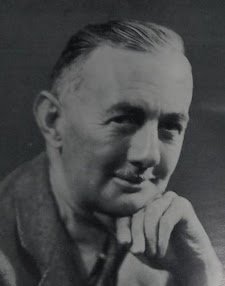
J.M.N. Jeffries
Few people will be familiar with his name, even those with a knowledge and interest in Palestinian affairs, but his contribution cannot be overlooked. His 750-page magnus opus, Palestine: The Reality, is largely unknown due to the bombing of a publishing house in London during the German blitz of 1940. Only 20 copies were known to be in circulation until a recent reprint in 2017 by Skyscraper Publications brought Jeffries' work back into wider public accessibility and with it his 12 years of meticulous research into the primary source material, historical documents, debates, and dispatches from Palestine. The result produced a critical assessment of the Balfour Declaration and its legacy and is an invaluable resource providing a persuasive argument for historians studying the Palestine question in the years 1917 to 1938.


“Palestine: The Reality is the most important study of Palestine yet published. As such it deserves to be in the hands of every man who cares for justice and peace”.

SIR ARNOLD WILSON, 1939

Jeffries recognised that for the Zionist project to succeed, the Palestinian people, their national identity, culture, and history would need to be concealed, dehumanised, or reduced to a condition that could easily be swept aside, or as he put it “vanish like the mist before the sun of Zion”. To this end, Zionists sought to establish a framework that Palestine was "a land without a people, for a people without a land", a slogan that Zionists like Israel Zangwill had adopted from early Christian restorationists. It was picked up and paraphrased by Chaim Weizmann, later president of the World Zionist Congress and the first president of the State of Israel, who said at a meeting in Paris in April 1914: "In its initial stage Zionism was conceived by its pioneers as a movement wholly depending on mechanical factors: there is a country which happens to be called Palestine, a country without a people, and, on the other hand, there exists the Jewish people, and it has no country. What else is necessary, then, than to fit the gem into the ring, to unite this people with this country?"

Theodor Herzl, the father of Zionism, thought that if Palestine could be positioned as an “outpost to civilization as opposed to barbarism,” it might be a more desirable destination for colonisation than Argentina, one of the many options then under discussion. These arguments were clearly designed to negate the validity of Palestinian Arab nationalism. In Ben-Gurion's view, there was no apparent contradiction between upholding the rights of a re-emerging nation in its ancient homeland and rejecting the legitimacy of the political demands of a people whose national instincts had been roused by contact and encouragement from Western governments and by the clash with Zionism itself.

Weizmann’s shuttle diplomacy to promote a Zionist wish list prior to the publication of the Declaration in 1917 betrays the fact that the authors were not British officials at all, but an influential group of some 20 Zionist leaders on both sides of the Atlantic tasked with composing a formula that would give them an unarguable right to the country and that it was Britain’s obligation to assist them in the endeavour. To provide this assistance it was necessary for the British Mandate to use coercion and brute force against an unwilling indigenous population in achieving these goals.

When Britain discarded the rights of the Arabs of Palestine in their quest to achieve self-determination and self-governance, and substituted it with the “rights” of a foreign community, they did so in the full knowledge of the facts. This was no honest mistake. To achieve Zionist goals, the Palestinians had to be erased. After killing 13,000 Palestinians during the Nakba of 1948, destroying 531 towns and villages and with 85% of the population banished and displaced, Ben Gurion endorsed this triumphant moment for the Zionist movement with the words: “We must do everything to ensure that they never do return!”

It was against this ill-conceived and deceitful perspective that Jeffries began to compile the source material, much of it previously unpublished, that forms the bulk of the case against the Balfour Declaration in his book, Palestine: The Reality. Throughout the 750-pages of his monumental work, Jeffries is clear, insistent, and outspoken in who is primarily responsible for the circumstances imposed upon Palestine. With each page being a damning criticism of the Declaration, Jefferies sums up his argument this way:

“More than anything else, we in Britain must keep clear in our minds today that we are the accused.”

Over eighty years have passed since Jeffries wrote these words in 1939, yet how many more countries share the responsibility for the current assault upon Palestine, “this small and wronged country”?

Today, this one-hundred-year-old story of the Palestinian struggle has found a new voice, originating from the ruins of Gaza, chanted on the streets of our capital cities, and echoed by young people in universities around the world. Above all, it is a story of resilience, perseverance, and resistance. The Palestinians have a single word for these traits, it is “sumud,” and the olive tree, ubiquitous throughout the land, is the symbol of sumud, reflecting the Palestinian sense of being rooted in their homeland.


CASUALTY UPDATE
As of 17/05/2024, the Gazan health ministry confirms that over 35,272 Gazans have been killed by the Israeli Defense Force. Of those, 24,686 are people whose identities that have been fully verified. There are 79,205 wounded. Two thirds of all casualties are women and children.

The Health Ministry says that there are more than 10,000 people that have been killed but it does not have their full names, official ID numbers or other information it needs to be certain of their identities.

Moreover, an estimated further 10,000 people remain missing, most likely buried under the rubble across Gaza.


Saturday, November 18, 2023

THE LONG ROAD TO COLLECTIVE DISPOSSESSION – PART ONE

The following essay examines the four main British-backed negotiations or agreements produced during WW1 that ultimately led to the 1948 founding of the State of Israel and the event known to the Palestinians as the Nakba, or the catastrophe. Special attention is given to Stewart Newcombe’s twin dilemma: his efforts to find a long-term solution that would satisfy the needs of both the Arab and Jewish people while also fulfilling his obligation to safeguard British interests.

As of today (18 November 2023), we are witnessing what is in danger of becoming the second Nakba for the Palestinians following the forced evacuation of 1.5 million citizens of northern Gaza to the south during Israel’s war on Hamas. In an update to my previous post dated 7 November 2023 Newcombe and the Palestinians, Israel has revised the official death toll of its citizens killed during the Hamas attack on 7 October down from 1400 to 1200 (comprising over 800 Israeli and foreign national civilians, along with over 350 army and police personnel). As of 19 November 2023, a conservative estimate of Palestinians killed during Israel’s bombing campaign against Hamas in Gaza stands at more than 11,000, the majority being women and children. The final figure will likely increase due to preventable death from disease and infant mortality. An unknown number of casualties (estimated at 2,700) remain undiscovered under the rubble of the ruined city.

The following framework of pledges and agreements made during World War One clearly demonstrates the diplomatic twists and turns that has led to the present dark chapter in the history of the region and its people, as well as Great Britain's role in it. These are:

1. THE McMAHON-HUSSEIN CORRESPONDENCE 1915- 1916

2. THE SYKES-PICOT AGREEMENT - May 1916

3. THE BALFOUR DECLARATION 1917

4. THE DECLARATION TO THE SEVEN - 16 July 1918

Prior to the start of the war, both Stewart Newcombe and T.E. Lawrence carried out extensive exploration of Greater Syria, and Palestine in particular; Newcombe as a Royal Engineer officer extending Kitchener’s survey of Palestine south of Beersheba and into the Sinai, and Lawrence in search of Crusader Castles and later as an archaeologist at Carchemish with Leonard Woolley. It was at a camp south of Beersheba that both archaeologists first met Newcombe in order to provide cover to the secret military survey that was being conducted under the auspices of the Palestine Exploration Fund by several teams in an area known as the Wilderness of Zin. Lawrence was quick to realise why they were there: “We are obviously only meant as red herrings, to give an archaeological colour to a political job.”

For the most part, their experience of the Biblical landscape was fixed in the present, i.e., in daily relations with an Arab Muslim majority population. Newcombe’s pre-war reports contain detailed assessments of the various Arab and Kurdish tribes and their allegiances or potential for obstructing British imperial aims. Jewish colonies were at this time largely on the periphery of his experience, whether indigenous Palestinian Jews speaking Arabic or early Zionist settlers speaking Yiddish.

Although estimates vary, a variety of sources suggest that approximately 657,000 Muslim Arabs, 81,000 Christian Arabs, and 59,000 Jews made up Ottoman Palestine's population in 1914, the year of Newcombe's survey. During the war, the government deported a large number of Jews who were foreign citizens, and some Jews left Palestine after being offered the choice to become Ottoman citizens. In this way, by December 1915, about 14% of the Jewish population had departed.

Despite Newcombe's long association with the Palestine Exploration Fund, whose founding principles were based on the archaeological exploration of Palestine as a way of ground-truthing a Biblical narrative, he readily acknowledged the demographic status quo that existed at the time of his surveys, namely a majority Muslim population with a leadership aiming for self-determination after the end of Ottoman rule. While the study of the historical landscape had its place in the survey, his relationships with Arab chiefs, tribal confederations and Turkish officials during this period were clearly more relevant to the aims of his covert military mission, which were to map previously unchartered regions to help defend the lifelines of the British Empire, as well as surveying future battlefields on which he and Lawrence would later fight. His secret reports to the British Embassy in Constantinople show that he was more concerned with Arab nationalist issues than observing a Jewish renaissance.

THE WAR YEARS

At the start of the war, Lawrence worked under Newcombe’s direction in Military Intelligence for nine months in Cairo where they gathered information on Turkish troop dispositions and movements and monitored the potential for an Arab uprising in Syria, and the Arabian peninsula.

1. THE McMAHON-HUSSEIN CORRESPONDENCE 1915- 1916

Between July 1915 and March 1916, Britain had given assurances to the Sharif of Mecca in what became known as the McMahon–Hussein Correspondence (July 1915 to March 1916), a series of ten letters exchanged during World War I between Lieutenant Colonel Sir Henry McMahon, the British High Commissioner to Egypt, and Hussein bin Ali, the Sharif of Mecca, agreeing to recognize an independent Arab state in the region that was then under Ottoman rule in exchange for Hussein launching the Arab Revolt against the Ottoman Empire.

The need for such an agreement from the British perspective was partly Arab assistance in the fight against the Turks, but more importantly as a counter to the prospect of an Ottoman call for jihad, or holy war, as well as securing the continued backing of the millions of Muslims in British Indian, where many were supporting the Allies by serving in the Indian Army. The letters remain significant for their role in shaping the future political landscape of the Middle East and the understanding of British promises to various Arab leaders during the war.

However, the exchange of letters was conducted with a degree of ambiguity and left certain key terms, such as the boundaries of the proposed Arab state, open to interpretation. This later led to disputes and conflicting claims about the promises made.

This ambiguity later contributed to the disagreements between the promises made to the Arabs during the war and the agreements and pledges that came into effect afterwards, particularly the Sykes-Picot Agreement and the Balfour Declaration, both of which seemed to contradict the spirit of the Hussein-McMahon Correspondence.

Labels such as ‘Perfidious Albion’ are often applied by historians in the light of evidence from the very same author of the British promises who did not believe in the strength of his own proposals. In a private letter to India’s Viceroy Charles Hardinge sent on 4 December 1915, McMahon expressed a somewhat different view of what the future of Arabia would be, contrary to what he had led Sherif Hussein to believe:

[I do not take] the idea of a future strong united independent Arab State ... too seriously ... the conditions of Arabia do not and will not for a very long time to come, lend themselves to such a thing ... I do not for one moment go to the length of imagining that the present negotiations will go far to shape the future form of Arabia or to either establish our rights or to bind our hands in that country. The situation and its elements are much too nebulous for that. What we have to arrive at now is to tempt the Arab people into the right path, detach them from the enemy and bring them on to our side. This on our part is at present largely a matter of words, and to succeed we must use persuasive terms and abstain from academic haggling over conditions—whether about Baghdad or elsewhere.

Lawrence saw things differently. “I had dreamed, at the City School of Oxford, of hustling into form, while I lived, the new Asia which time was inexorably bringing upon us. Mecca was to lead to Damascus; Damascus to Anatolia, and afterwards to Baghdad; and then there was Yemen.”

Lawrence had dreamed big, and the results of his efforts would torment him for the rest of his life. But even Newcombe was not immune from the knowledge that he had deceived the Arabs. Arnold Lawrence, (T.E.’s brother) wrote to Jeremy Wilson, Lawrence’s authorised biographer, in August 1971: “Newcombe’s feeling of guilt persisted to the end of his life and kept him constantly active in furthering Arab political aims.”

The secret Hussein-McMahon Correspondence was a pivotal episode within the historical context of the Middle East, shaping the scepticism throughout the political landscape of the region, and highlighting the discrepancy between the promises made and the geopolitical realities that unfolded after the war.

Towards the end of 1915 there was an unexpected announcement within closed government circles that rang alarm bells in Cairo as it threatened to cast aside Anglo-Arab discussions relating to the aspirations for national self-determination coming from Arab leaders in Syria, the Hejaz and Yemen. Following recommendations from the De Bunsen Committee, a British Government report on present and future relations with the Ottomans, secret negotiations between the British and the French had begun to work towards an agreement on a post-war division of the spoils within greater Syria and Turkey. With discussions between Cairo and Sherif Hussein well under way it was decided that the negotiations between the British and the French must for now be kept secret.

2. THE SYKES-PICOT AGREEMENT - May 1916

Enter Sir Mark Sykes of Great Britain and Francois Georges-Picot of France. With an eye on the prize, a secret agreement was drawn up to divide the Ottoman Empire's territories in the Middle East after the war's end between their respective countries.

Named after its negotiators, the agreement established spheres of influence and control in the Middle East for these two European powers. The agreement essentially aimed to split the region into areas of control, mainly to secure their strategic interests and prevent conflict between themselves over these territories.

The Sykes-Picot Agreement designated various zones of control, which were divided into areas of direct and indirect influence for both countries within modern-day countries such as Syria, Lebanon, Iraq, and Palestine. However, it is essential to note that the implementation of the agreement was significantly altered by subsequent developments, such as the Balfour Declaration and the eventual collapse of the Ottoman Empire.

The Agreement has had a lasting impact on the Middle East, contributing to the drawing of borders that often ignored local ethnic, religious, and tribal divisions. It's seen by many as a prime example of the arbitrary division of territories by colonial powers, often cited for the problems and conflicts in the region that persist to this day. Sykes-Picot remains crucial in understanding the ideology (at least as depicted through its propaganda) of the Islamic State (IS) militant group. Its leader, Abu Bakr al-Baghdadi, was described by IS as "the breaker of barriers", reinforcing the sentiment that Sykes-Picot was a symbol of foreign interference.

The reality, however, is far more nuanced. One could argue that the agreements made at the 1920 San Remo Conference -- attended by leaders from Britain, France, Italy, and Japan -- rather than the Sykes-Picot agreement, are ultimately responsible for the internal borders of many Middle Eastern countries we know today. Sykes and Picot wielded a broad brush in creating the post-war colonial framework of countries out of the old Ottoman Empire; the current geopolitical borders were established over a longer period of time, a process that had a great deal to do with regional power struggles, rather than any foreign imperial meddling.

3. THE BALFOUR DECLARATION 1917

Whereby “One nation solemnly promised to a second nation the country of a third.”

On the 2 November 1917, Arthur James Balfour, the United Kingdom's foreign secretary in Lloyd George's new administration, sent the following declaration to Lord Rothschild, a leading member of the British Jewish community:

I have much pleasure in conveying to you, on behalf of his Majesty's government, the following declaration of sympathy with Jewish Zionists aspirations which has been submitted to, and approved by, the Cabinet.

His Majesty's Government view with favour the establishment in Palestine of a national home for the Jewish people, and will use their best endeavours to facilitate the achievement of this object, it being clearly understood that nothing shall be done which may prejudice the civil and religious rights of existing non-Jewish communities in Palestine, or the rights and political status enjoyed by Jews in any other country.

As a response to various factors, including lobbying efforts by the Zionist movement and considerations of British imperial interests during World War I, the British government saw strategic advantages in issuing the declaration.

Lord Rothschild was seen as a liaison and representative of the Jewish community, and his involvement in the process was crucial. He worked closely with Chaim Weizmann, a Zionist leader, to advocate for British support for a Jewish homeland in Palestine. The Balfour Declaration, in part, aimed to win Jewish support for the Allies in World War I and to gain favour among influential Jewish communities, particularly in the United States and Russia. Britain also had considerable strategic interests in the Middle East and the Mediterranean region, in Egypt and the Suez Canal in particular, and an advantage was sought through the declaration in securing control over these territories in any post-war settlement.

This simple statement of intent from the British government, whereby “one nation solemnly promised to a second nation the country of a third,” as one leading Jewish intellectual put it (Arthur Koestler), was at the heart of the Zionists’ hopes of creating a political homeland. With its announcement coming as the Allies pushed north through Palestine towards the prize of Jerusalem ‘by Christmas’, the hopes of Zionism lay in a total defeat of the German-backed Ottomans and with Palestine coming under a British mandate or protectorate.

Despite reservations, Stewart Newcombe, operating alongside T.E. Lawrence with Sherif Feisal’s men in the Hejaz, accepted the document with all its stipulations, in particular those that respected the civil and religious rights of existing non-Jewish communities in Palestine. After all, this declaration had not just been conjured up in the mind of the British foreign secretary on a whim. Behind the scenes, Zionist leaders Chaim Weizmann and Nahum Sokolow and British minister Sir Mark Sykes had been shuttling between allies to secure a common agreement. Sokolow was especially successful in obtaining the Cambon Letter of agreement from France, which ignored the rights of non-Jews, and the support from Pope Benedict XV as the Vatican controlled many of the Christian holy sites in Palestine. His relations with Louis D. Brandeis, Supreme Court Justice under President Wilson, secured support from the USA. With the Allies standing by Britain’s side, Balfour issued his government’s declaration with confidence. Despite his personal reservations, Newcombe was duty bound to accept his government's pledge to the Zionists and to work within its framework.

While consensus for the declaration on a Jewish homeland was being sought around the world, discussions of a contradictory nature continued to be made between the British and the French causing considerable tension in the dealings between British officers and Arab leaders in the Hejaz.

ATTITUDE OF THE BRITISH OFFICERS

The mental agility involved in keeping all the pieces in play was stressful to most of the British officers working with the Arabs. Mark Sykes’ arrival in the Hejaz in May 1917 to sound out his ‘proposals’ with Feisal and Sherif Hussein was an alarming development, especially as his proposal to carve up the region had already been agreed with Francois Georges-Picot, the French representative. Following on the heels of General Murray's failure to break the Turkish line at the First Battle of Gaza, Sykes adopted a policy of deception and was especially careful not to give away details of the division of the spoils lest it threaten Arab cooperation. Within the agreement, Palestine, always the stumbling block, was designated to be governed by an international administration. Sykes felt well satisfied until someone pointed out that the Jews might have a very strong interest in the future of the country and could oppose any agreement or promises. This came as somewhat of a surprise to Sykes who until that moment had not considered the Jews in his deliberations.

Newcombe shared Lawrence’s distress and felt they were being manipulated or exploited by Sykes and Picot. He summed up the feeling when he wrote that Sykes must return and openly and honestly deal with Hussein and his sons, “otherwise we are hoodwinking the Sherif and his people and playing a very false game in which officers attached to the Sherif’s army are inevitably committed and which I know causes anxiety in several officers’ minds: in case we let them down.” Another officer, Colonel Wilson went further: “Is the Sherif living in a fools’ paradise?” he wrote. “If so he will have a very rude awakening and once his trust in Great Britain has gone we will not get it back again.”

In Newcombe’s mind the solution was simple: “…he [Faisal] must have a political propaganda which will induce the people to risk their lives. It must be a clear statement, showing that they will be fighting for an Arab Government.”

Lawrence’s anguish was compounded by the fact that he was about to depart on the Aqaba expedition just two days after Sykes’s visit. He would soon be compelling men to fight for freedom and self-government over land that was already assigned. Feisal remained focussed on this aim in his father’s name, but it was also well known by Lawrence and others that the Hashemites remained in secret negotiations with the Turks as an insurance policy to secure their long-term objectives.

Throughout their close association during the war, Lawrence and Newcombe remained convinced of the priority of securing Arab assistance under the leadership of the Hashemites to ‘enable England, while fighting Germany, simultaneously to defeat Turkey’. Newcombe was certain that had any suggestion of a Zionist movement been put forward, the Sherif would have done nothing to help the British. The Bolshevik Revolution late in 1917 was a moment of deep concern when the secret treaties of the allies were revealed to the world’s press. Lawrence’s role had just got harder. Newcombe, meanwhile, was out of the fray having got himself captured during an operation behind enemy lines at the Third Battle of Gaza.

4. THE DECLARATION TO THE SEVEN 1918

On 16 June 1918, Mark Sykes responded to a secret memorandum written by seven anonymous Syrian notables in Cairo requesting a "guarantee of the ultimate independence of Arabia".

The seven Syrians were members of the recently formed Syrian Unity Party which was established in the wake of the Balfour Declaration and the publication by the Bolsheviks of the Sykes-Picot Agreement.

In what became known as The Declaration to the Seven, Sykes expressed His Majesty’s Government’s great care in considering their requests despite their anonymity which he said, “has not in any way detracted from the importance which His Majesty's Government attribute to the document.”

The areas mentioned in Sykes’ response fell into four categories and are worth setting out in full:
  1. Areas in Arabia which were free and independent before the outbreak of war.
  2. Areas emancipated from Turkish control by the action of the Arabs themselves during the present war.
  3. Areas formerly under Ottoman dominion, occupied by the Allied forces during the present war.
  4. Areas still under Turkish control.
In regard to the first two categories, Sykes stated that his government recognised “the complete and sovereign independence of the Arab inhabiting these areas and supported them in their struggle for freedom.”

In regard to the areas occupied by Allied forces, the British government drew the attention of the Seven to the texts of the proclamations issued by the General Commanding Officers following the capture of Baghdad and Jerusalem, proclamations that embodied the policy of His Majesty's Government towards the inhabitants of those regions. Namely:

“It is the wish and desire of His Majesty's Government that the future government of these regions should be based upon the principle of the consent of the governed and this policy has and will continue to have the support of His Majesty's Government.”

Sykes wrote that the government was aware, and would take into consideration, the dangers and difficulties for those who worked for the regeneration of the people in the specified regions, and that all obstacles could and will be overcome with his government’s full support.

Finally, he declared that the government was ready to examine any cooperative plan that aligned with existing military operations and consistent with the political principles of His Majesty's Government and the Allies.

Aside from private assurances and promises, the Declaration, written less than five months before the end of the war, was the first statement from the British Government to the Arabs advocating national self-determination. The Declaration was read out to the Seven on behalf of the Foreign Office by an official at the Army headquarters in Egypt and a copy was sent to Sherif Hussein. 

On the night of 30 September 1918, Lawrence and the Sherifian Arab Army were poised to enter Damascus aware that under the terms of the Declaration the Arabs had the right to establish a government over all the territory that they liberated. It is unclear who entered Damascus first but Lawrence, who had been detained by a patrol of Bengal Lancers in a mix-up over his identity, recorded the moment he finally entered the city that he had dreamed of helping to conquer since a boy in Oxford:

"The streets were nearly impassable with the crowds, who yelled themselves hoarse, danced, cut themselves with swords and daggers and fired volleys into the air. Nasir, Nuri Sha'lan, Auda abu Tayi and myself were cheered by name, covered with flowers, kissed indefinitely and splashed with attar of roses from the house-tops."

Riding his horse at the head of a large possession, Faisal later entered the town to further scenes of wild jubilation and joy. As his biographer, Ali Allawi, wrote: "The flags of the Arab Revolt were everywhere. For now, at least, the city was at his feet." After two years of hard warfare, Faisal was the undisputed leader of the Arabs of Greater Syria. The revolt had triumphed, but with immense difficulties on the horizon the battle for the heart and soul of the Arab cause had just begun. 

POST-WAR PERIOD

As agreed in the secret agreements of the Allies, the aftermath of the war saw the division of the Middle East into mandates and colonies controlled by various European powers, with the Arab territories being divided up between Britain and France. These actions led to disillusionment among the Arab population and contributed to a deep-seated mistrust of Western powers due to perceived broken promises.

Throughout his life, Newcombe continued to fight against the injustices perpetrated against the Palestinians, as shown in this letter to The Times in 1939:

Being one of the few survivors who made promises on behalf of the British Government to the Arabs in 1917, I state the facts as follows:

1. We made several promises to the Arabs: in 1915 the McMahon letters; in 1916-18 promises by leaflets dropped by aeroplanes, by speeches to prisoners of war, and by any means we could devise, to induce them to desert and rebel against their own Government: we asked them to run the risk of being hanged and to risk the lives of their families: we offered them freedom as a reward; 2,000 deserters and others joined up from Palestine alone, and were at Wadi Musa in 1918.

2. In November, 1917, we made a vague and qualified promise to the Jews, without asking the Arabs whether it contravened our promises to them.

3. On hearing of the Balfour Declaration the Arabs who were helping us by their revolt stopped fighting in December, 1917. So we sent Commander D. G. Hogarth to explain to King Hussein that the Jewish Settlement would be consistent with the economic and political freedom of the Arab people. On such conditions King Hussein accepted "Jews into an Arab House" and the Arabs went on fighting with us.

4. For some years we deluded Arabs and ourselves by saying that the National Home was “cultural and spiritual” and non-political. Had we kept to that meaning little trouble would have occurred.

It would be very desirable, from the point of view of honour, that all these various pledges should be set out, side by side, and then consider what is the fair thing to be done. This is all that the Arabs ask…

For the rest of his life, Newcombe maintained strong views on what he considered were acceptable levels of Jewish immigration to Mandatory Palestine in the years between the World Wars, based on his long study of the region, its people, infrastructure and resources. Believing the Arabs of Palestine would not vanish like the mist before the sun of Zion he therefore thought it imperative they had fair representation in the contest for the hearts and minds of those in power who would ultimately bring about the fulfillment of the Balfour Declaration, with all its stipulations – important provisos which supported his firm belief that only by respecting native interests could you achieve a lasting consensus. He worked tirelessly towards that aim after consulting the opinions of his many Jewish and Moslem friends before reaching proposals for what might be termed a bi-nation state solution. His convictions, once reached, never wavered.

In Part Two I will explore Newcombe’s role in delimiting the boundaries of Palestine and Lebanon, his role as the Honorary Secretary of the Palestine Information Centre in London, his collaboration with Albert Hyamson in seeking a just and sustainable future for both Arabs and Jews in Palestine, known as the Hyamson-Newcombe Proposal, his work with Hyamson and others in drawing up a Constitution for Palestine, and perhaps his most fitting legacy to his Muslim friends, that of helping to establish the first purpose built mosque in London.

Sunday, October 22, 2023

ARABS AND PALESTINE Daily Telegraph 1945

CONTEXT On this day 78 years ago:

To the Editor of The Daily Telegraph

Sir, 

The Dowager Countess Lloyd-George implies that we are reversing our policy and going back on our word to the Jews if we do not allow the homeless Jews of Europe to go to Palestine. 

Our policy since 1939 has been that of the White Paper, which was based on the weighing up, for the first time, of promises made to Arabs and of the Balfour Declaration. Lord Maugham's Committee stated that the British Government "were not free to dispose of Palestine without regard for the wishes and interests of the inhabitants of Palestine." The Balfour Declaration was the only promise made to the Jews, and the establishment of a national home for the Jews in Palestine was viewed with favour only so far as it did not prejudice the civil and religious rights of the existing population.

Various statements have been made by the Government that a Jewish State is not promised: various declarations to the Arabs qualify the extent of the Balfour Declaration. If there still be doubt that the latter has not been fulfilled, let an impartial, judicial body examine all the evidence available and let the matter be finally clarified

The Arabs object to the entry of more Jews into Palestine because they fear political domination if they are outnumbered by Zionists. The Arab League, however, have offered to accept more than their share of Jewish refugees on grounds of humanity into other Arab States where political fears do not arise.

Yours faithfully,

S. F. NEWCOMBE, Col.

London, SW7

(Dated 22.10.1945)